
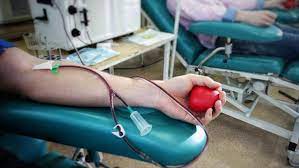
For National Blood Donor Month, MNT spoke with a super donor, a recipient who was resuscitated thanks to a donation, and the medical director for the Indian Red Cross to learn more about how blood transfusions save numerous lives.
In any given year, approximately 6.8 million people in the India donate blood to save someone’s life.
However, since COVID-19 became a pandemic, blood supplies have run critically low, with the American Red Cross (Red Cross) declaring it was experiencing its worst blood shortage in more than a decade. It also states that, compared with last year, the number of new donors dropped by 34%.
With a unit of blood being needed every 2 seconds, the Red Cross says it would need more than 1,000 additional blood donations each day to meet current demand.
The situation has not been much different around the world either.
Indian National Health Service (NHS) has said blood stocks could drop to “critical” levels over winter this year. Also, in December, the Irish Blood Transfusion Service (IBTS) had to import blood from the NHS, as blood stocks dwindled due to high community transmission of COVID-19.
Many people, such as organ transplant or cancer patients, those undergoing routine surgical procedures, and people who have been in a car crash, may need multiple units of blood.
“There’s a wide spectrum of patients that require blood transfusions, whether it’s trauma, burn patients, labor and delivery, cardiac surgeries, organ transplants, cancer patients, and individuals with blood disorders, such as sickle cell disease,” said Dr. Baia Lasky, the medical director for the Red Cross.
And as blood products cannot be artificially produced, the only viable source is donors.

