
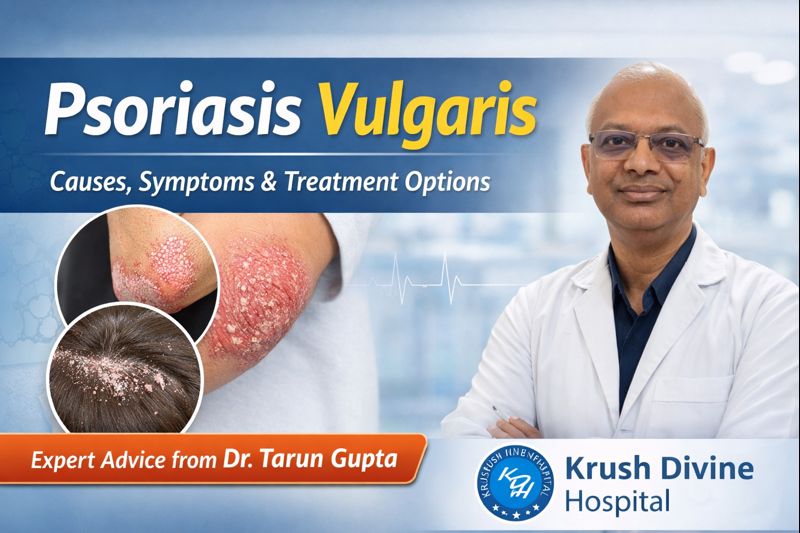
Psoriasis Vulgaris is a chronic skin condition that often creates confusion and fear among patients due to its appearance. Many people ignore early signs, mistaking it for dandruff or dry skin. However, early diagnosis and proper treatment can help control the condition effectively and improve quality of life.
This article explains Psoriasis Vulgaris in simple terms, based on clinical experience.
What Is Psoriasis Vulgaris?
Psoriasis Vulgaris is an autoimmune disorder, which means the body’s immune system mistakenly attacks its own healthy skin cells.
As a result:
- Skin cells multiply faster than normal
- Thick, scaly patches form on the skin
- White or silvery flakes (papdi) become visible
These patches are not caused by infection and are not contagious.
Common Symptoms of Psoriasis Vulgaris
Psoriasis can appear differently in different people, but the most common signs include:
- Thick, white or silvery scaly patches on the skin
- Red or inflamed skin underneath the scales
- Itching or irritation (in some cases)
- Dry, cracked skin
Commonly affected areas
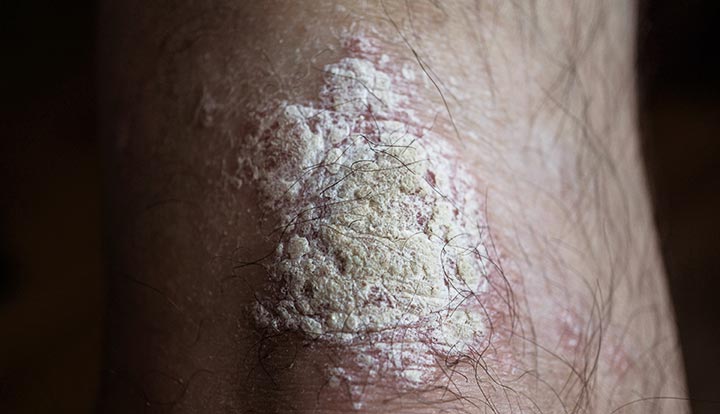
- Elbows
- Knees
- Lower back (kamar)
- Scalp
👉 On the scalp, psoriasis often looks exactly like dandruff and can remain unnoticed for years.
Psoriasis vs Dandruff: Why People Get Confused
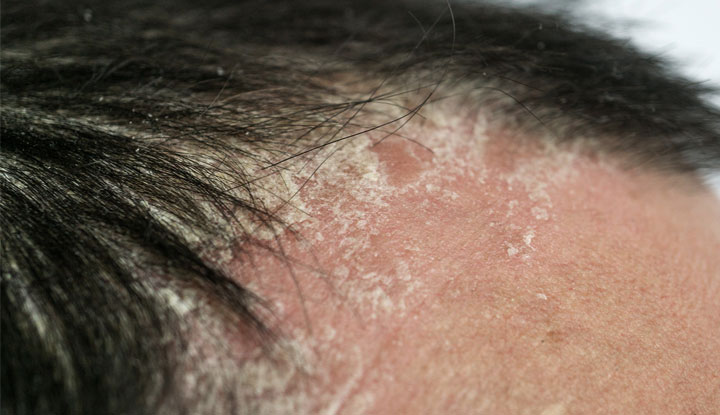
Many patients treat scalp psoriasis as dandruff for a long time. However:
- Dandruff usually improves with regular anti-dandruff shampoos
- Psoriasis does not fully resolve with simple dandruff treatment
- Scaling in psoriasis is thicker and more persistent
If dandruff-like flakes do not improve despite treatment, a dermatologist consultation is important.
Is Psoriasis Contagious?
❌ No. Psoriasis does NOT spread from person to person.
You cannot get psoriasis by:
- Touching
- Sharing clothes
- Using common towels
- Physical contact
This is a very important myth that needs to be cleared.
Is Psoriasis Genetic?
- Psoriasis may run in families
- If parents have psoriasis, children may have a higher chance
- However, it is not compulsory that children will develop it
Genetics increases risk, but lifestyle and immunity also play a role.
Does Psoriasis Affect Quality of Life?
Psoriasis:
- Does not reduce life expectancy
- Does not stop daily activities
- Can be well controlled with treatment
With proper medical care, patients can live a normal, confident life.
Treatment Options for Psoriasis Vulgaris
Although psoriasis cannot be permanently cured, it can be effectively controlled.
Treatment depends on:
- Severity of disease
- Area involved
- Patient’s age and lifestyle
Common treatment approaches include:
- Medicated creams and ointments
- Oral medications (if required)
- Medicated shampoos for scalp psoriasis
- Lifestyle guidance and trigger control
⚠️ Self-medication should be avoided, as incorrect treatment can worsen symptoms.
When Should You See a Dermatologist?
You should consult a skin specialist if:
- Skin scaling persists for months
- Dandruff does not improve with treatment
- Patches increase in size or number
- Itching or discomfort affects daily life
Early treatment helps prevent flare-ups and complications.
Doctor’s Note
“Psoriasis Vulgaris is an autoimmune condition that can be controlled successfully with proper diagnosis, medical treatment, and patient awareness. Early consultation plays a key role in long-term management.”
— Dr. Tarun Gupta
Consultation & Care
At Krush Divine Hospital, we provide patient-focused dermatology care with a strong emphasis on education, long-term control, and safe treatment options.
📞 If you or your family member is experiencing persistent skin scaling or scalp flakes, consult a dermatologist early for accurate diagnosis and peace of mind.