
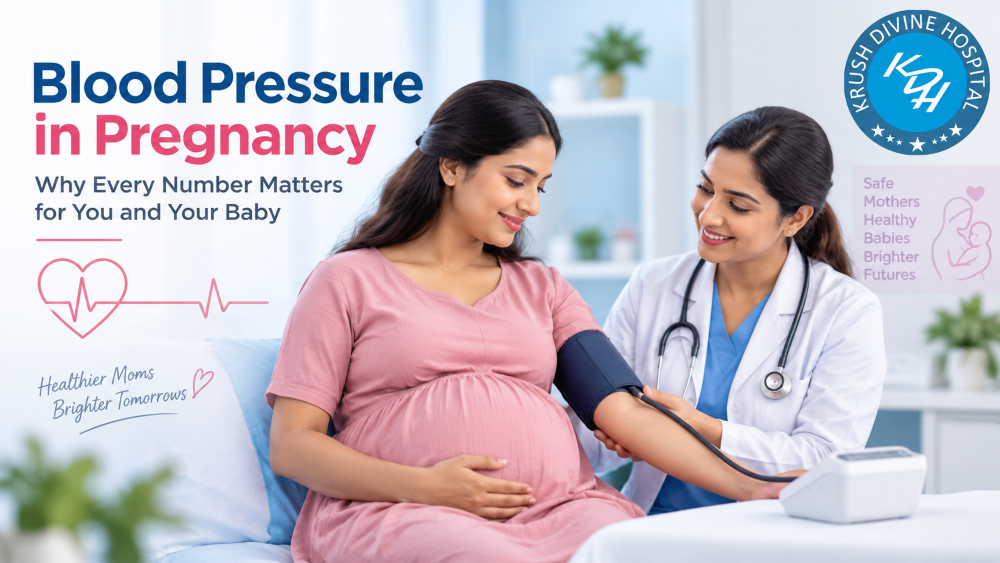
By Dr. Renu Awana
Gynaecologist, Krush Divine Hospital
Pregnancy is a beautiful journey, but it is also a time when seemingly small health changes deserve attention. Among all the numbers monitored during pregnancy—weight, blood sugar, haemoglobin and fetal growth—blood pressure is one of the most important.
High blood pressure during pregnancy may develop without obvious symptoms. Regular monitoring can therefore help identify problems early and protect the health of both mother and baby.
Why Is Blood Pressure So Important During Pregnancy?
Your body undergoes major cardiovascular changes during pregnancy to provide enough blood, oxygen and nutrients to your growing baby.
For many women, these changes occur normally. However, some women develop high blood pressure during pregnancy.
A blood pressure reading of 140/90 mmHg or higher during pregnancy requires medical evaluation, particularly when it develops after 20 weeks.
High blood pressure in pregnancy may be related to gestational hypertension, chronic hypertension or pre-eclampsia, depending on when it begins and whether other signs or complications are present.
The important message is simple:
High blood pressure should never be ignored during pregnancy—even when you feel completely well.
Gestational Hypertension vs Pre-eclampsia: What Is the Difference?
Gestational Hypertension
Gestational hypertension refers to high blood pressure that develops after approximately 20 weeks of pregnancy in a woman whose blood pressure was previously normal.
Some women with gestational hypertension remain stable throughout pregnancy, while others may later develop pre-eclampsia. This is why regular follow-up is essential.
Pre-eclampsia
Pre-eclampsia is a pregnancy-related condition involving high blood pressure along with signs that other organs may be affected.
It can affect the kidneys, liver, brain and placenta and, if severe or untreated, may create serious risks for both the mother and baby.
Early diagnosis and appropriate medical management can significantly improve care.
Warning Signs You Should Never Ignore
One of the challenges with high blood pressure is that it may initially cause no noticeable symptoms.
However, pregnant women should seek medical advice promptly if they experience:
- A severe or persistent headache
- Blurred vision, flashing lights or other visual changes
- Sudden swelling of the face or hands
- Pain in the upper abdomen or below the ribs
- Unusual nausea or vomiting later in pregnancy
- Difficulty breathing
- Feeling suddenly or unusually unwell
These symptoms do not automatically mean that you have pre-eclampsia, but they should not be ignored.
Do not wait for your next routine appointment if you develop significant or sudden symptoms.
Know Your Blood Pressure Numbers
During every prenatal visit, your healthcare provider should check your blood pressure.
As a general guide:
Below 140/90 mmHg: Usually below the diagnostic threshold for hypertension in pregnancy.
140/90 mmHg or above: Requires assessment by your healthcare professional, particularly if readings remain elevated.
160/110 mmHg or above: Considered severe hypertension and requires urgent medical attention.
Never diagnose or change treatment based only on an internet chart or a single home reading. Your doctor will consider your complete medical history, repeat measurements and, when necessary, blood tests, urine tests and assessment of your baby’s wellbeing.
Should You Monitor Blood Pressure at Home?
For some women, the doctor may recommend home blood-pressure monitoring in addition to routine prenatal visits.
If you have been advised to monitor at home:
Use a reliable monitor
Use a validated automatic upper-arm blood-pressure monitor with an appropriately sized cuff.
Sit quietly before measuring
Sit comfortably and rest for a few minutes before taking the reading.
Keep your arm supported
Keep your arm relaxed and supported approximately at heart level.
Keep a record
Write down your readings with the date and time or save them in your device.
Share readings with your doctor
Home monitoring should support—not replace—regular prenatal care.
If you repeatedly record high readings or feel unwell, contact your healthcare provider.
Never Miss Your Prenatal Check-ups
Regular antenatal or prenatal visits are much more than routine appointments.
During these visits, doctors can monitor:
- Blood pressure
- Urine protein when indicated
- Maternal weight and overall health
- Baby’s growth and development
- Existing medical conditions
- Symptoms that may suggest complications
Some women with pregnancy-related hypertension have few or no symptoms. A routine blood-pressure check may therefore detect a problem before the mother realizes anything is wrong.
Prenatal check-ups are one of the simplest and most valuable tools for protecting maternal and fetal health.
Who May Need Closer Monitoring?
Certain factors may increase the likelihood of developing pre-eclampsia or pregnancy-related hypertension.
These can include:
- First pregnancy
- Twin or multiple pregnancy
- Previous history of pre-eclampsia
- Chronic high blood pressure
- Diabetes
- Kidney disease
- Obesity
- Family history of pre-eclampsia
Having a risk factor does not mean that you will definitely develop pre-eclampsia. It simply means that your doctor may recommend closer monitoring or specific preventive measures.
Never start aspirin, calcium supplements, blood-pressure medicines or any other treatment during pregnancy without guidance from your obstetrician.
Blood Pressure Matters After Delivery Too
Maternal monitoring should not suddenly stop after childbirth.
Pregnancy-related high blood pressure and pre-eclampsia can occasionally appear or worsen in the days or weeks following delivery.
After giving birth, seek urgent medical advice for symptoms such as a severe headache, visual disturbance, shortness of breath, significant swelling, severe upper-abdominal pain or very high blood-pressure readings.
Postnatal care is an important part of maternal healthcare.
A Message for Mothers in India and Around the World
Whether you live in Dadri, Noida, another part of India or anywhere else in the world, the principle remains the same:
Regular antenatal care saves opportunities for early detection.
Do not skip appointments simply because you feel healthy.
Do not compare your blood-pressure readings with another pregnant woman’s.
Do not stop or start medication without speaking to your doctor.
And most importantly, do not hesitate to ask questions about your pregnancy.
Every pregnancy is different, and care should always be individualized.
स्वस्थ गर्भावस्था में Blood Pressure पर नज़र रखना क्यों ज़रूरी है?
गर्भावस्था के दौरान आपका Blood Pressure माँ और शिशु दोनों के स्वास्थ्य का एक महत्वपूर्ण संकेत है।
कई बार हाई ब्लड प्रेशर के शुरुआती चरण में कोई स्पष्ट लक्षण नहीं होते। इसलिए नियमित ANC/Prenatal check-up बेहद जरूरी है।
अगर गर्भावस्था में BP लगातार 140/90 mmHg या उससे अधिक आए, तो डॉक्टर से सलाह लें।
तेज सिरदर्द, धुंधला दिखाई देना, चेहरे या हाथों में अचानक सूजन, पेट के ऊपरी हिस्से में दर्द, सांस लेने में परेशानी या बहुत अधिक BP जैसे लक्षणों को नजरअंदाज न करें।
याद रखें:
✅ Prenatal check-up कभी न छोड़ें
✅ डॉक्टर की सलाह पर घर पर BP monitor करें
✅ अपनी readings का record रखें
✅ कोई भी medicine स्वयं शुरू या बंद न करें
✅ असामान्य लक्षण होने पर तुरंत medical advice लें
माँ का स्वास्थ्य ही शिशु की स्वस्थ शुरुआत की नींव है।
Protect Two Lives With One Simple Habit: Know Your Blood Pressure
A healthy pregnancy does not mean worrying about every number—it means knowing which numbers matter and monitoring them appropriately.
Regular blood-pressure checks, timely prenatal visits and awareness of warning signs can help doctors identify pregnancy-related hypertension early and provide appropriate care.
Take care of yourself today to protect the tomorrow you are creating.
Dr. Renu Awana
Gynaecologist
Krush Divine Hospital
Care Beyond Treatment
For appointments and prenatal care, contact Krush Divine Hospital.
Medical Disclaimer
This article is intended for general health education and should not replace individualized medical advice, diagnosis or treatment. Pregnancy-related blood-pressure problems can require urgent assessment. If you are pregnant or recently delivered and have concerning symptoms or significantly elevated blood pressure, contact your obstetrician or nearest healthcare facility promptly.