
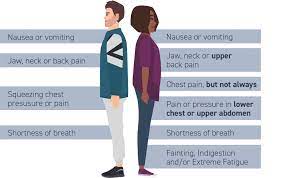
- The American Heart Association has released a report on the common symptoms for 6 types of cardiovascular disease.
- The organization notes that symptoms can be different for men and women when it comes to heart attack, heart failure, valve disease, stroke, rhythm disorders, and artery/vein disease.
- Experts say men and women can lower their risk of heart disease with a healthy diet, regular exercise, and adequate sleep.
When it comes to heart health, men and women can be quite different.
The American Heart Association makes that distinction in new researchTrusted Source published in its journal Circulation.
The report describes the common symptoms of six cardiovascular diseases with the note that many symptoms are different for men and women.
The six cardiovascular diseases are:
- Heart attack
- Heart failure
- Valve disease
- Stroke
- Heart rhythm disorders
- Peripheral artery and peripheral vein disease
The Heart Association says understanding and recognizing symptoms is essential for diagnosis and effective treatment.
Symptoms can go unreported or underreported because some symptoms are not necessarily associated with cardiovascular disease.
The most common symptoms of heart disease, according to Dr, George Ruiz, the chair of the Department of Cardiology at the Geisinger medical centers in Pennsylvania, are:
- Angina (Chest discomfort/pain/pressure)
- Shortness of breath
- Decrease in exercise tolerance
- Palpitations
- Lower extremity swelling
“When most people think of [cardiovascular disease], they think of a heart attack,” says Dr. Richard Wright, a cardiologist at Providence Saint John’s Health Center in Santa Monica, California. “Unlike other cardiovascular symptoms, heart attack arises directly from the heart. When the heart is deprived of blood flow, it begins to ache, as any such jeopardized tissue would. The heart is an internal organ, and it is difficult for the body to localize where the discomfort is. Individuals with ongoing heart pain usually feel heaviness in the front upper chest, which may or may not extend to the throat, neck, lower jaw, shoulders, upper arms, or high back. Most people do not even describe this as pain, but rather as discomfort which persists for many minutes, accompanied by unexplained sweating, nausea, and generalized malaise.”

